Top/Learn/Movie Stack/クレーンショット
どんな時に使う?

旅・vlog
MV・CM

ショートドラマ
使うと、どう変わる?
全体と人が、一続きの動きでつながる。
クレーンショット
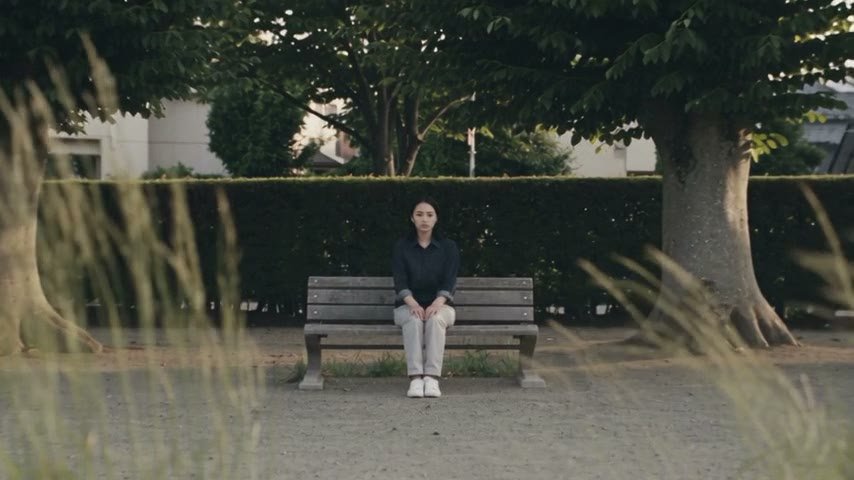
手前の生け垣が下へ抜けていく


AI でどう作る?
STEP 1
始まりと終わりの高さを書く
片方だけだと動きが小さくなる
AI への指示Crane shot: the camera rises vertically on a crane from his eye level to about 6 meters, at a constant speed with gentle ease-in and ease-out, slowly tilting down to keep him in frame; it clears the top of a hedge in the foreground.
Crane shot: the camera rises vertically on a crane from his eye level to about 6 meters, at a constant speed with gentle ease-in and ease-out, slowly tilting down to keep him in frame; it clears the top of a hedge in the foreground. Character: the man from the character reference sheet: same face, small scar at the end of the left eyebrow, short slightly messy black hair, open plain dark-navy cotton overshirt jacket with one left chest pocket over a plain white crew-neck T-shirt, charcoal grey chinos, black plain sneakers. Location: a courtyard between old five-story concrete public housing apartment blocks. 0.0s-1.5s: at eye level, he stands behind a waist-high hedge, looking across the courtyard. 1.5s-3.5s: the camera rises; the hedge top passes the lens and the courtyard opens. 3.5s-5.0s: from above, he is small in the middle of the paved courtyard between the blocks, still looking ahead. Shot on a cinema camera with a 24mm lens, one soft overcast sky as the only light source, real skin texture with pores, visible fabric fibers, concrete wall stains, hedge leaves, paving tiles. Natural, neutral color, no heavy grading. No text, no logos. Ambient sound: courtyard room echo, distant children, a balcony door sliding.
STEP 2
手前に遮る物を置く
縁を越えた瞬間に奥が開ける
生け垣の手前 縁を越えた STEP 3
向きの変え方は一つだけ
昇りながら少しずつ下を向く

主役を外さない
仕上げのひと手間は?
AI は速さがむらになり、建物も歪みやすい。崩れた所だけ編集で整える。
POINT 1
崩れる前で切る
速さがそろい歪みのない区間だけ残す
POINT 2
速さのむらをならす
速度点を打ち、遅い区間を少し速める
よくある失敗は?
✕ よくある失敗
速さがむらで手ぶれに見える
○ こうする
一定の速さを言葉で縛る